
Apple Unveils Touchscreen MacBook Pro
The new 14-inch and 16-inch laptops feature OLED displays and start at $2,899.
By Jabari Long ·
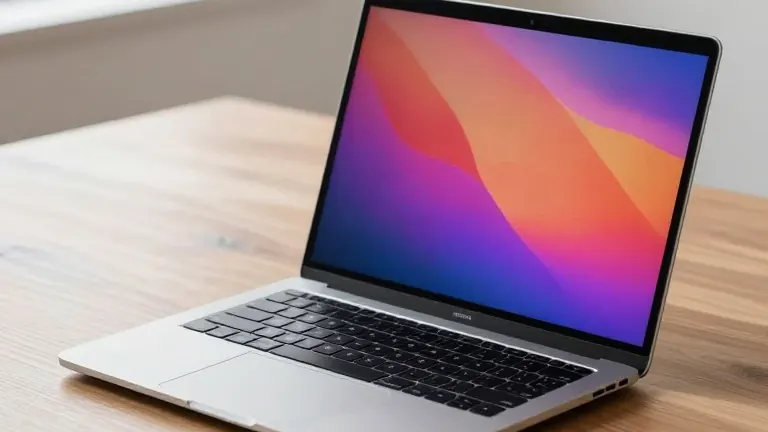
Apple introduced its first MacBook Pro with a touchscreen on Wednesday, ending a long period of hesitation regarding touch interfaces for its laptop line. The new device goes on sale November 6, with preorders available immediately. The 14-inch model is priced at $2,899, while the 16-inch version costs $3,399.
The laptops feature a tandem OLED display branded as PROLED XDR. This screen delivers up to 2,000 nits of peak SDR brightness, a 120Hz refresh rate, and a 10,000,000:1 contrast ratio. Apple states that the touch sensor is integrated directly into the display panel rather than layered on top, a design choice the company says reduces latency.
Internally, these machines run on M5 Pro or M5 Max chips, distinguishing them from other MacBook Pros announced this week that use M6 processors. The displays include a Dynamic Island, a feature previously associated with iPhones, which can display Live Activities. The illuminated Apple logo on the lid has also returned to the design.
Apple suggests several uses for the touch capability, including scrolling web pages, zooming into photos, and playing software instruments. The company noted that developers can add touch support to their applications through an updated API. In a press release, Apple claimed its own software is already optimized for touch input.
The physical form factor has shifted slightly with the new models. The 14-inch version weighs 3 pounds and features a 14.2-inch screen, while the 16-inch model weighs 4 pounds with a 16.3-inch display. Apple reports that the 16-inch laptop is nearly a millimeter thinner than its predecessor, and the 14-inch model is half a millimeter thinner. Both devices offer up to 24 hours of battery life and include ports for MagSafe 3, headphones, SD cards, HDMI, and three Thunderbolt 5 connections.
The company has a history of resisting touchscreen laptops. In 2010, Steve Jobs described them as ergonomically terrible. Tim Cook echoed similar sentiments in 2012, comparing the convergence of tablets and laptops to merging a toaster and a refrigerator. Apple previously experimented with the Touch Bar on MacBook Pros from 2016 to 2021 but reverted to physical function keys in 2021 and removed the Touch Bar entirely in 2023.
This launch follows a series of recent announcements from Apple, which also included an iPad Mini with an OLED display and M6-powered iMacs.