Hyperscaler spending hits $800 billion as political shifts threaten AI growth
Wall Street analysts warn that new Democratic controls in Congress could slow data center construction, potentially shaving 1% off U.S. GDP growth if equity markets decline.
By Layla Petrov ·
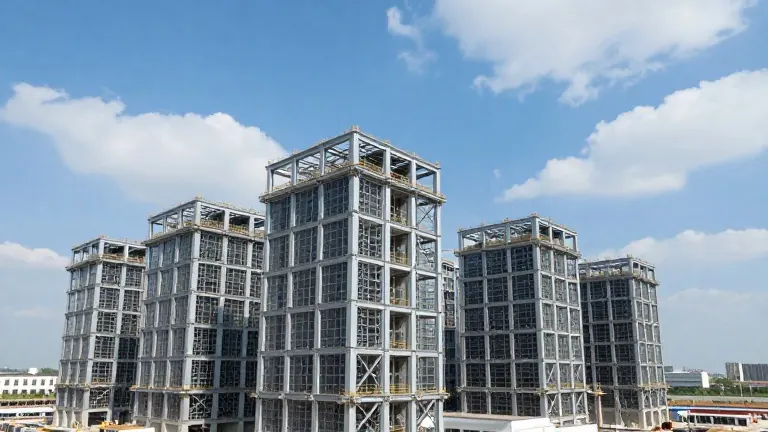
Hyperscalers including Alphabet, Amazon, Meta, and Microsoft are set to spend approximately $800 billion on data center infrastructure in 2026. Capital Economics projects this figure will double again to reach $1 trillion by 2027. This massive capital expenditure drives a large portion of U.S. business investment and financial market performance.
Federal Reserve researchers estimate that spending on data centers, power facilities, and related AI equipment accounted for roughly 20% of U.S. gross domestic product over the preceding year. In 2025, investment in the AI sector added about 0.3 percentage points to real GDP growth. Capital Economics expects the sector to boost growth by a similar amount in 2026.
New political dynamics are complicating the buildout. Economists and investors anticipate that the Democratic wins in recent midterm elections will slow data center development and increase its cost. Opposition to these facilities varies by region, ranging from construction moratoriums to moderate regulatory proposals. Experts note that these political headwinds are unlikely to stop projects that already hold permits or are currently underway.
Stephen Brown, chief North America economist at Capital Economics, argues that the current pace of spending is difficult to justify financially. He stated that major AI companies would need to generate $2 trillion in revenue by the early 2030s to sustain such capital expenditures. Brown believes this revenue target is unlikely, predicting a slowdown in construction. He described the potential impact on the U.S. economy as detrimental.
Mark Zandi, chief economist at Moody's Analytics, said investors are likely to keep funding AI for the next couple of years. However, he expressed uncertainty about long-term capital availability. If funding dries up, AI companies may need to raise prices to cover costs. This shift could reduce the level of investment seen in recent years.
The slowdown poses specific risks to consumer spending. Brown notes that higher-income Americans who invested in AI stocks have seen their wealth grow sharply. The S&P 500 has risen nearly 100% over the past three years. Brown estimates that this equity wealth effect is currently boosting economic growth by roughly 0.5%.
If AI investment falls in 2028, it could become a drag on the economy. Vicky Redwood, chief economic advisor at Capital Economics, estimated in a research note that a 10% annual drop in AI spending would reduce GDP growth by about 0.1%. Brown warned that if the S&P 500 loses 20% of its value, the wealth effect would turn into a 0.5% drag on GDP. He calculated that this would result in a total 1% hit to GDP growth, causing a sharp slowdown but not necessarily a recession.
More Business · Watch Your Wallet · Report a business · Got a Story?