NSW limits upstream pumping as Menindee storage hits five-year low
Combined lake volumes fell below 480 gigalitres, triggering restrictions in the northern Murray-Darling basin to preserve water for critical needs.
By Layla Petrov ·
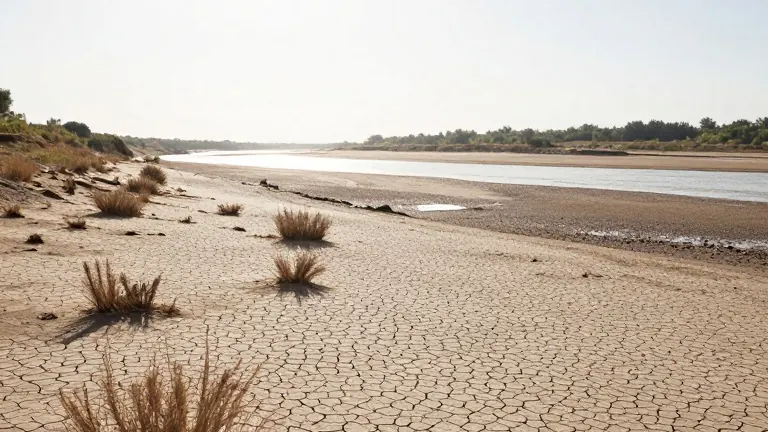
The combined storage at Menindee Lakes in western New South Wales dropped below 480 gigalitres earlier this month. This marks the first time the system has fallen to that level since 2021. In response, the state government imposed water use restrictions on upstream areas to protect critical supplies.
The restrictions apply to parts of the northern Murray-Darling basin. Water volumes in the upper Menindee Lakes have fallen below 250 gigalitres. This specific threshold triggers temporary state limits on access for some irrigators. The goal is to preserve water for human needs and environmental stability.
Experts link the current low levels to twelve months of reduced rainfall in the catchment. They warn that poor flows via the Darling-Baaka River increase the risk of mass fish deaths over the coming summer. Menindee experienced catastrophic fish kills in 2018, 2019, and 2023, where millions of dead fish washed ashore.
Prof Jamie Pittock of the Australian National University and the Wentworth Group of Concerned Scientists stated that officials predict fish kills with certainty unless more water flows into the Baaka-Darling River. He called for a major rainfall event and for state governments to stop irrigators from pumping out the first flush of water.
Graeme McCrabb, a Menindee resident who raised the alarm during the 2018 and 2019 disasters, described the current levels as reaching drought reserve volumes. He said this means conservation of water at all costs. McCrabb noted that small inflows from Queensland offer some hope but are insufficient on their own. He warned that the risk of fish kills would be very high in January or February without additional inflows.
An expert panel established under the northern basin connectivity program recommended limiting upstream overextraction during dry periods to maintain tributary flows. The panel delivered its final report two years ago. The state government has not yet implemented these recommendations. McCrabb expressed disappointment, stating that government agencies have made no policy changes to improve water quality outcomes since the previous fish kills.
Comment has been sought from NSW water minister Rose Jackson. The current measures aim to prevent a repeat of the large-scale drying and algal growth that characterized previous drought years.