Palestinian Voters Break Gridlock in Israel's Fragmented Parliament
High turnout by Arab citizens leaves both major Jewish blocs short of a majority, triggering a dispute over coalition building.
By Layla Petrov ·
The outcome of Israel's parliamentary election has left the country without a clear governing majority. Prime Minister Benjamin Netanyahu's Likud party appears to be the largest single force, but its allies have not secured enough seats to form a government on their own. The opposition bloc, which identifies as Zionist, also falls short of the threshold needed to rule.
The decisive factor in this stalemate is the performance of Palestinian citizens of Israel. Approximately 80 percent of eligible voters in this demographic cast ballots on Tuesday. This represents a sharp increase in participation for a community that accounts for roughly 21 percent of the total population. Analysts attribute the surge to anger over the war in Gaza and perceived racism from the current governing coalition.
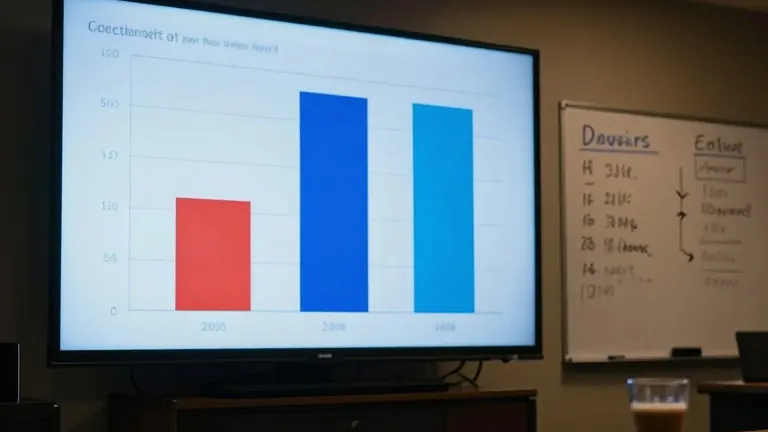
Two main lists representing Palestinian citizens, the United Arab List and the Joint List, won a combined total of 19 seats in the 120-seat parliament. With all ballots counted, the pro-Netanyahu bloc holds 53 seats, while the Jewish opposition holds 48. When the 19 seats held by Palestinian parties are added to the opposition count, a clear majority of the parliament stands against the current prime minister.
Rather than acknowledging this arithmetic, leading figures in the pro-Netanyahu camp have moved to challenge the legitimacy of the results. Likud characterized the outcome as an attempt to drive the 'Islamisation of Israel.' The party called on the Shin Bet, the internal security service, to investigate whether foreign interference contributed to the high Palestinian turnout. Other officials described the voting pattern as an attempt to steal the election.
These actions have created friction within the opposition. While many Jewish-led parties criticize Netanyahu's government for corruption and poor international standing, they remain hesitant to rely on Palestinian support. Former prime ministers Naftali Bennett and Yair Lapid ruled out sitting in a government with Palestinian parties on election night. They had previously relied on such support during their brief administration from 2021 to 2022.
Avigdor Lieberman of the Yisrael Beytenu party reinforced this stance on Thursday. He stated he would sit with neither Netanyahu, whom he called Bibi, nor Ahmad Tibi, the leader of the Ta'al party within the Joint List. Only the left-wing Democrats appear likely to cooperate with Arab parties to form a government.
Orly Noy, a candidate for the Palestinian-dominated Balad party, described the high turnout as a predictable response to the governing coalition's conduct. She noted that Palestinians sensed they could be next after the war in Gaza showed no red lines. Noy also cited soaring crime rates and a police force led by National Security Minister Itamar Ben-Gvir as driving factors. She stated, 'The last tool they had in their toolbox was their vote, but even that now seems to be being undermined and delegitimised.'
Political analyst Nimrod Flaschenberg explained that the resistance stems from deep-seated assumptions in mainstream Israeli politics. He noted that many view the Arab vote as a challenge to the concept of Jewish supremacy, a dynamic he linked to the 2018 Nation State Law. That law made the right to national self-determination exclusive to Jewish people. Flaschenberg argued that these ideological differences often mask underlying racial tensions in the political debate.
More Politics · World news · Report a business · Got a Story?