Amazon Abandons Four-Data-Center Plan in Loudoun County for Residential Development
Following sustained community resistance, the tech giant will convert the majority of a 122-acre site into mixed-use housing while donating land for public facilities.
By Layla Petrov ·
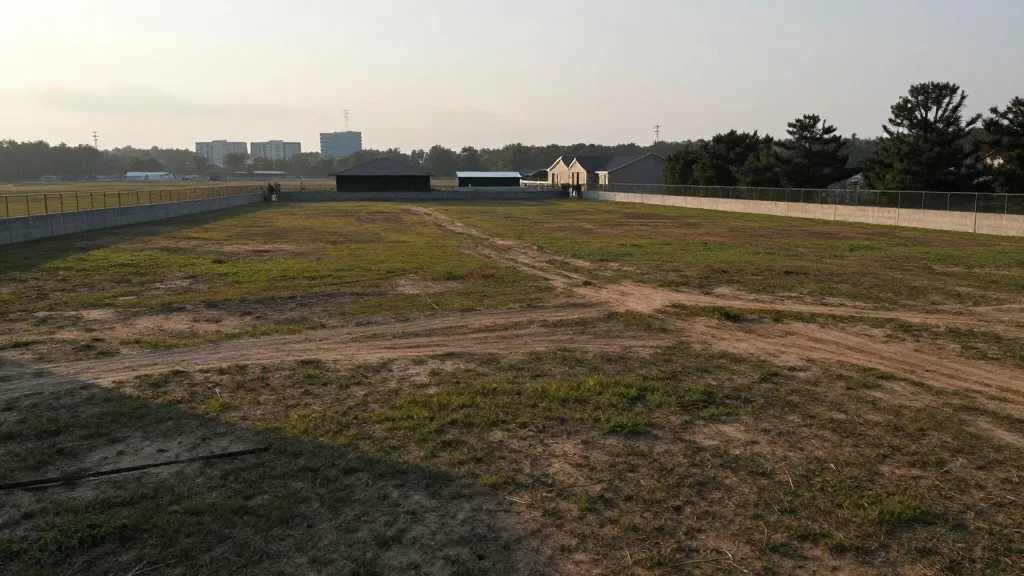
Amazon has officially withdrawn its proposal to construct four new data center facilities on a 122-acre parcel in Loudoun County, Virginia, located just outside the District of Columbia. In a significant shift from its initial plans, the company will instead repurpose the majority of the land for mixed-use and residential development. This decision marks the end of a contentious period in which the tech giant sought to expand its artificial intelligence infrastructure in a region already saturated with similar facilities.
The site in question is the former campus of George Washington University. Under the new arrangement, Amazon will not only build housing and mixed-use structures but will also donate 25 acres of the property to Loudoun County. This donated land is designated for the construction of a community arts center and a new recreational facility. Additionally, the company has committed to providing a $5 million contribution to the county’s housing fund, a move intended to address local concerns regarding affordable living spaces.
The timeline of this development began in July when Amazon first submitted its proposal to build the data centers. The plan faced immediate scrutiny, as Loudoun County is frequently referred to as “Data Center Alley” due to its status as the location with the highest concentration of data centers globally. Residents expressed deep concerns about the operational noise generated by these facilities and the substantial power requirements needed to keep them running. In September, Amazon met with Phyllis J. Randall, the Chair of the Loudoun County Board of Supervisors, where officials suggested that the company might achieve a better outcome by finding an alternative use for the land.
Josh Weissman, Amazon’s vice president in charge of data center development, explained the company’s decision-making process. He noted that the firm had been eager to purchase the former university campus when the opportunity first arose. However, he acknowledged that the company carefully considered the county’s “pointed concerns about data center development at this particular site.” Weissman stated that while Amazon viewed the property’s legal development potential differently than the county did, the company concluded that “the best outcome for all is to come together on a shared vision for this campus rather than engage in costly litigation.”
This local negotiation occurs against the backdrop of a broader national debate regarding the impact of artificial intelligence infrastructure. The rapid growth in cloud-based services and AI usage has driven demand for larger and more powerful facilities to unprecedented levels. However, this expansion has sparked opposition from local communities worried about spikes in electricity prices and environmental strain. Just days before this announcement, President Donald Trump called on data center builders and AI hyperscalers to pay dividends to local communities to offset energy-related price increases. He further proposed that these facilities should generate their own electricity and return any excess power to the local grid, addressing issues such as water shortages and deforestation that often accompany such projects.
County officials have framed the outcome as a success of collaborative negotiation. Phyllis J. Randall stated that by choosing “dialogue over reflexive disagreement,” the county and Amazon created a valuable opportunity for the community. She emphasized that the agreement provides new spaces for residents to gather, create, and play. Most significantly, Randall noted that the project will provide more attainable homes for working families, addressing a critical need in the local housing market.
The resolution of this dispute highlights the increasing friction between tech giants’ infrastructure needs and local community preferences. While the immediate plan avoids litigation and provides tangible community benefits, it also reflects a broader trend where local authorities are leveraging their land-use powers to shape the development of AI infrastructure. The repurposing of the George Washington University site serves as a case study in how dialogue can lead to compromises that balance commercial expansion with residential and recreational needs.
As Amazon moves forward with the mixed-use development, the 122-acre site will undergo a transformation that prioritizes residential density and public amenities over server racks and cooling systems. The $5 million housing fund contribution and the 25-acre donation for arts and recreation represent concrete deliverables for Loudoun County residents. This shift underscores the evolving landscape of data center construction, where local acceptance is becoming a critical factor in the siting of new facilities.
More Business · Watch Your Wallet · Report a business · Got a Story?