Fathom Releases Faith-Adjacent James Stewart Biopic 'Jimmy'
KJ Apa stars in Aaron Burns' film, which prioritizes Stewart's WWII service over his filmography.
By Jabari Long ·
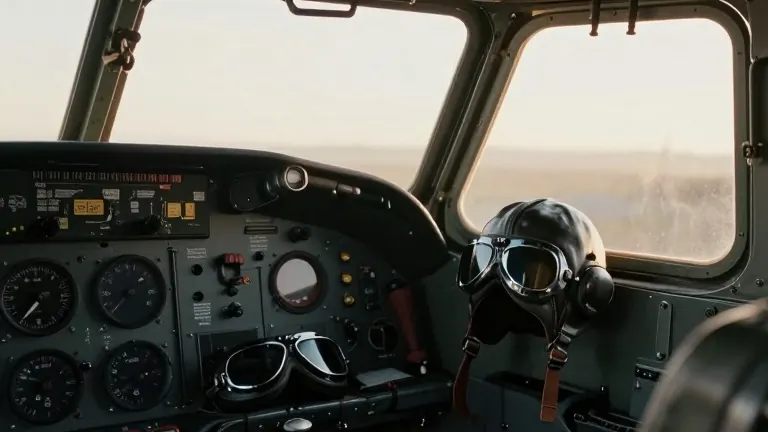
Hollywood has long marketed James Stewart as the embodiment of American decency, a reputation that likely influenced the creative choices in his new biopic, 'Jimmy.' The film, directed by Aaron Burns and released by Fathom Entertainment, leans heavily into that public image while shifting focus away from Stewart's artistic legacy toward his military service.
The script, written by Justin Strawhand, treats Stewart's Presbyterian background and patriotic duty as central pillars of the narrative. Burns, whose previous two features were produced by the streaming arm of Christian studio Affirm Films, creates a story that is not explicitly faith-based but emphasizes religious epiphany during moments of crisis. The most detailed sequence depicting Stewart's Hollywood career is a reconstruction of the bridge prayer scene from 'It's a Wonderful Life,' a moment Stewart himself cited as his favorite from his filmography.
KJ Apa portrays Stewart, capturing the star's signature drawl and persona. The performance is described as enthusiastic but thin, offering a sentimental semblance of the actor's soul without delving into deeper human complexity. The film positions Stewart as an interchangeable nice guy, relying on distinctive vocal mannerisms rather than internal conflict to drive the character.
The narrative opens in 1941, five years after Stewart's Academy Award win for 'The Philadelphia Story.' He receives his draft letter from the U.S. Army, prompting a clash with studio head Louis B. Mayer, played by Jason Alexander, who urges Stewart to capitalize on his post-Oscar fame. Gossip columnist Hedda Hopper, portrayed by Sarah Drew, falsely reports that Stewart has dodged the draft.
Stewart enlists in the Air Force, leading to a five-year hiatus from the screen. He serves as a bomber pilot for the 453rd Bombardment Group in England, where he bonds with his crew and engages in aerial combat shot in a synthetic video game style. The film also includes a fictionalized romance with an aristocratic Englishwoman played by Kara Killmer.
Critics note that the film squanders opportunities to explore the tension between Stewart's celebrity, soldier, and civilian identities. The tone remains consistently ennobling, with Stewart delivering lines such as 'I don't want to be a god, I want to be man.' Director of photography James Mather applies a uniform visual finish to both Hollywood scenes and battle sequences, creating a consistent sheen that some view as artificial.
The story concludes with Stewart returning to set to film 'It's a Wonderful Life.' During a period of trauma, he receives advice from a director who asks if he is brave enough to give the audience truth. Stewart accepts the role, but the film itself is judged to fall short in delivering that same honesty about its subject.