Lula Overtakes Flávio Bolsonaro in Final Count
The incumbent president secured 64.2 million votes, reversing a two-point deficit from the first round to win a fourth term.
By Layla Petrov ·
Luiz Inácio Lula da Silva won his fourth term as Brazilian president on Sunday. He defeated Flávio Bolsonaro, the son of former president Jair Bolsonaro, in the second round of the presidential election. The final tally showed Lula capturing 51.79 percent of the vote. Flávio Bolsonaro received 48.21 percent. The margin of victory was more than four million votes. Lula secured 64.2 million votes, while his opponent garnered 59.8 million.
The outcome reversed the results of the first round held on October 4. At that time, Flávio Bolsonaro led by two percentage points. Pollsters had projected a statistical tie for the runoff. They did not predict Lula’s nearly four-point victory. This margin exceeded the gap Lula achieved against Jair Bolsonaro in the 2022 election. The left-wing victory came after the right-wing bloc won the legislative elections earlier in the month.
Lula framed the campaign as a contest between democracy and authoritarianism. He noted that Jair Bolsonaro faces a 27-year prison sentence for plotting a coup after losing power in 2022. In his victory speech, Lula credited young voters for defending democratic institutions. He also thanked older voters for reducing the high abstention rates seen in the first round. Lula positioned the election as a choice between national independence and submission to the influence of U.S. President Donald Trump.
Lula stated that Brazil refused to be a backwater for other nations. He said the country wants to be central rather than peripheral in global discussions. The former union leader, who is about to turn 81, adopted new tactics for the final weeks of the campaign. He purchased his first mobile phone and engaged with social media platforms for the first time. This shift, combined with a fear-based campaign strategy, contributed to his surge in support.
Flávio Bolsonaro rejected the result immediately after the count was finalized. He announced that he would seek annulment of the election in the courts. The dispute centers on a judicial order that extended voting hours by two hours nationwide. Supreme Court justice Cristiano Zanin, a former lawyer for Lula, issued the order one minute after the standard closing time. The delay caused confusion as some polling stations did not receive the notification in time. Consequently, those booths closed at their regular hours.
Kassio Nunes Marques, the president of the Superior Electoral Court, said the delay created technical and security difficulties. He also noted operational challenges during the voting process. Flávio Bolsonaro called the situation unacceptable. He described it as a total violation of the equality rights of Brazilian voters. In a statement to the press in Brasilia, Flávio said it is inexplicable that Lula's allies on the Supreme Court changed the rules of the game.
Lula’s Workers' Party argued that the extension was necessary because right-wing controlled cities failed to provide enough free bus services. This lack of transport disproportionately affected poor voters who typically support the left. Despite the complaints from the Bolsonaro camp, congressional leaders recognized the outcome. Hugo Motta, the speaker of the Chamber of Deputies, and Davi Alcolumbre, the senate leader, both accepted Lula’s victory. Both men are political allies of the re-elected president.
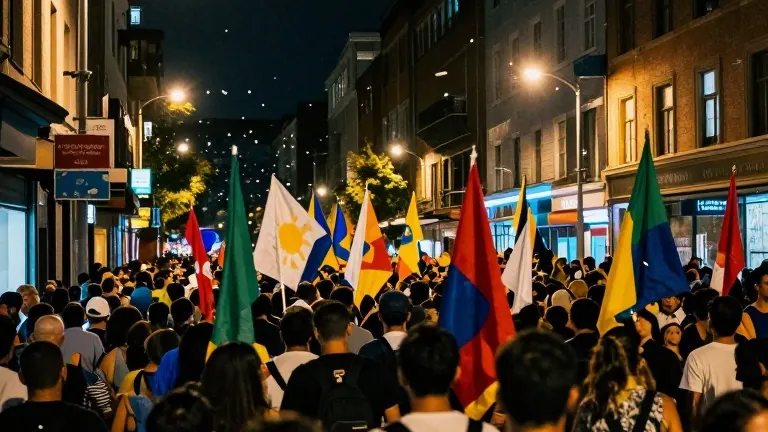
Celebrations erupted in cities across Brazil. The largest gathering took place in São Paulo. Tens of thousands of supporters crowded onto Avenida Paulista. Lula joined them to thank his base. The crowd chanted that a dictatorship would never return. The scale of the celebration surpassed the events from four years ago. It mirrored the massive rally that closed the left-wing campaign on Saturday. Lula must now negotiate with the most right-leaning congress in Brazilian history. This presents a challenge for his governance.