US Winter Storm Response Faces Major Staff Shortage as El Niño Intensifies
Noaa has lost nearly 20% of its workforce since early 2025, leaving gaps in forecasting and data collection just as a powerful climate pattern begins to impact the continent.
By Madison Lewis ·
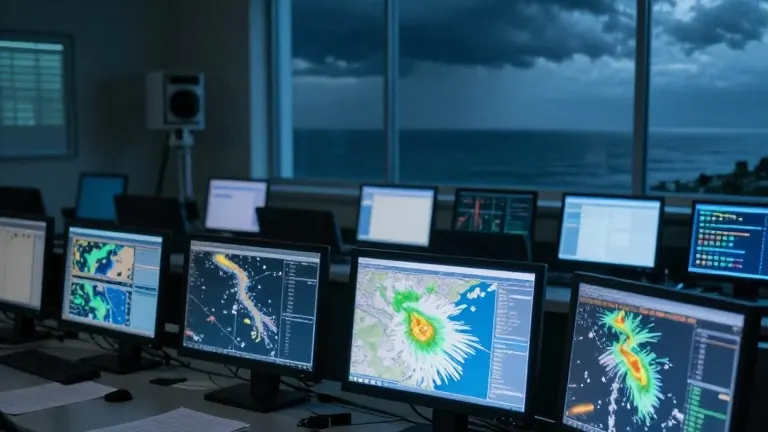
American weather stations are operating with fewer staff and shorter hours as a powerful El Niño system moves toward peak strength this winter. The National Weather Service, which relies on consistent data collection to issue warnings, faces hundreds of vacant technical and meteorological roles across its 122 forecast offices. This reduction in capacity occurs as the agency prepares for a season that experts describe as a potential stress test for the entire system.
Since January 2025, the National Oceanic and Atmospheric Administration (Noaa) has lost approximately 20% of its personnel. Workforce data from the US Office of Personnel Management, last updated in August, indicates that more than 3,000 staffers have left the agency. Only 525 new hires have been added during that period, leaving a deficit of roughly 2,500 positions. The cuts have affected key support functions, including a 27% reduction in information technology management workers and a halving of the public affairs team responsible for disseminating critical information.
The physical impact of these staffing levels is already visible in field operations. The NWS analyzes 6.3 billion observations daily but has struggled to maintain consistent coverage. In the Great Plains, delayed weather balloon launches left some communities with limited warning times for tornadoes. In Alaska, limited warnings for rural areas were cited as a factor in displacing more than 1,500 people during floods earlier this year. A government accountability office report noted that multilingual weather alerts were also inadequate due to funding and staffing cuts, raising risks for 26 million residents.
This winter's El Niño event is expected to drive above-average temperatures and intensified storms in the American West. It is also projected to raise sea levels in California by up to one foot, increasing the likelihood of debris flows and flash floods. Tom Di Liberto, a former Noaa climate scientist and current media director at Climate Central, stated that the system has not been tested since the cuts occurred. He described the situation as a major question regarding the country's ability to handle coast-to-coast extremes.
Research capabilities have also contracted. The administration terminated dozens of grants, resulting in a loss of more than $28 million in funding for states, cities, non-profits, and universities. Climate research was the most affected sector, with grant awards in fiscal year 2026 running 37% lower than the 2021 to 2024 average. Additionally, funding for a decade-long project to monitor oceans using autonomous robotic devices expires at the end of October. The administration has also proposed a $1.6 billion cut to Noaa funding for next year, a 26% reduction.
During the last strong El Niño a decade ago, Noaa deployed planes, weather balloons, unmanned aircraft, and a research ship to gather data. This year, only a handful of unmanned watercraft will be deployed into the Pacific, according to NPR. Monica Medina, who served as principal deputy administrator of Noaa during the Obama administration, expressed concern about the ability to protect the public during a time of heightened need. She noted that the current conditions offer a rare chance to learn about extreme weather patterns, but the agency is missing that opportunity due to reduced resources.