Waymo Robotaxis Reach Tampa's Elderly and Disabled, Testing New Accessibility Limits
Autonomous vehicles are expanding in Pinellas County, but users report steep learning curves and a rare safety incident during a recent Buccaneers game.
By Jabari Long ·
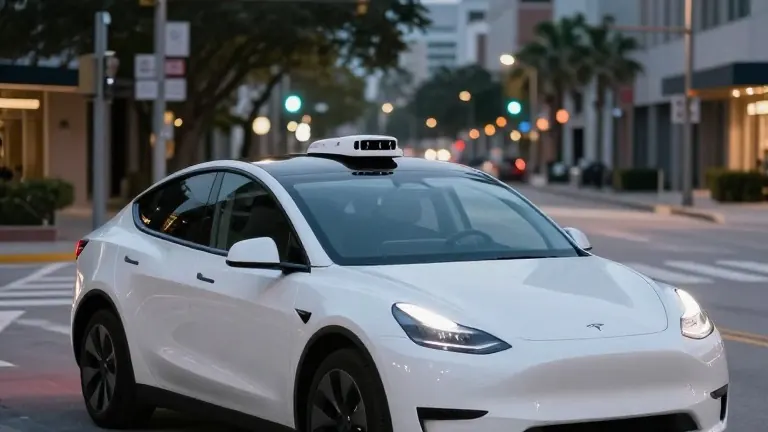
Waymo is testing autonomous ride-share routes in Pinellas County while serving about 50 square miles of Tampa. The expansion targets older adults and residents with disabilities who previously relied on limited transit options. Company officials say the service offers a new path to independence for those who can no longer drive safely.
Laura Sneed, director of outreach and engagement for AARP Florida, stated that having more transportation options is essential. AARP has implemented a buddy system to help older adults master the app required to request and unlock vehicles. Unlike traditional taxis, these rides have no human driver to assist passengers with doors or luggage.
Chelsea Bridges, a certified vision rehabilitation therapist with Lighthouse for the Blind and Low Vision in Tampa, has taken the service seven times. She noted that her foot often catches on the higher vehicle threshold, making entry difficult. Bridges, who is visually impaired, also struggles to identify her specific car in a parking area without a driver to confirm its location.
Bridges described the driving style as aggressive during a recent 10-minute trip to Oxford Exchange. She observed the vehicle changing lanes without hesitation in heavy traffic. However, she appreciated the automated voice notifications that alert passengers when they are approaching their destination. Waymo also permits guide dogs, a policy that differs from some human-driven services that have denied rides to service animals.
Debbie Malone, president of the National Federation for the Blind of Florida chapter in Tampa, noted that some riders are still denied service simply for using a white cane. Wayne Tuten, a Waymo spokesperson, said the company partnered with local groups through the Waymo Accessibility Network. The company reports that its autonomous rides are 10 times safer than average human drivers, citing 95 percent fewer serious injury crashes in existing markets.
Arman Sargolzaei of the Center for Urban Transportation Research said the service removes concerns about driver cognition during late-night trips. The vehicles use LiDAR sensors, cameras, and radar to map the environment in real time. This system predicts the movements of pedestrians, cyclists, and other cars while managing speed and steering. The service is currently available in 15 cities, including Orlando and Miami.
Local issues have already surfaced. After a Buccaneers game this month, a Waymo driven by University of Tampa students traveled on the wrong side of the road before stopping. The company called the event temporary and said it is investigating to improve the system. Matthew Reardon, one of the passengers, said he would ride again but would avoid using the service to leave large crowds.
Waymo mapped Tampa in detail before launching commercial rides. The company used empty test drives and artificial intelligence simulations to identify lane markers, stop signs, and curbs. The vehicles now rely on this detailed automated map rather than standard GPS. This data allows the system to respond to traffic light changes, construction zones, and temporary road markers.