35-Year U.N. Mission Ends in Western Sahara as Mandate Expires
A U.S.-Russia deadlock at the Security Council forced the abrupt conclusion of the MINURSO operation, leaving a disputed desert territory without its long-standing international observers.
By Layla Petrov ·
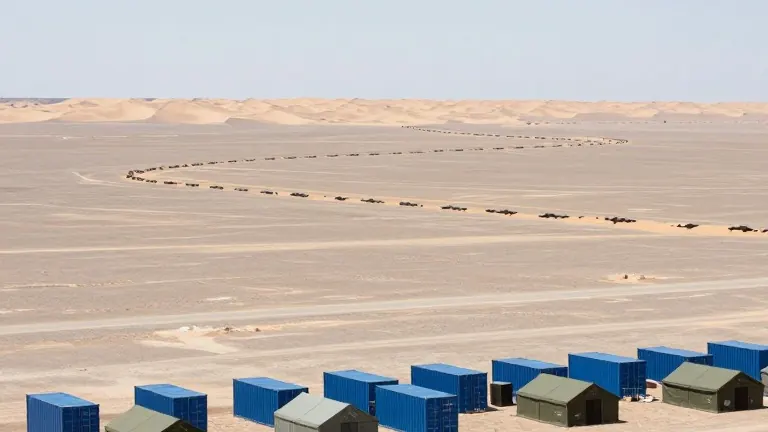
The United Nations formally ceased operations for its Western Sahara peacekeeping mission on Sunday. The termination of the mandate follows a sharp diplomatic split between Washington and Moscow at U.N. headquarters. The mission, known as MINURSO, was established in 1991 to monitor a cease-fire and facilitate a referendum on self-determination. That vote never took place due to disagreements over voter eligibility. The force operated for 35 years before its authorization lapsed without renewal.
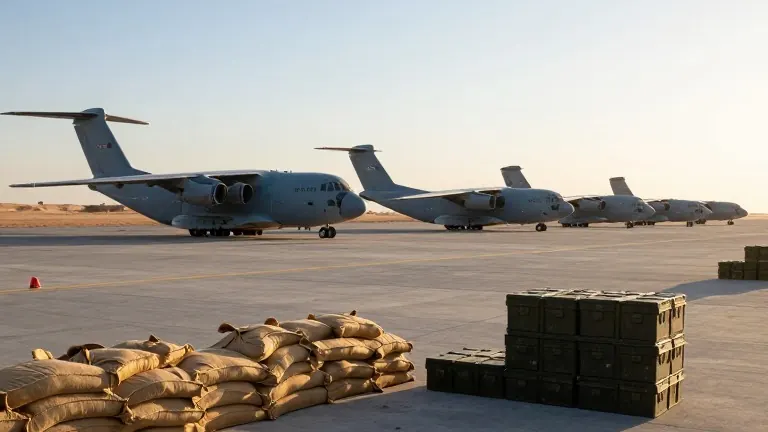
The mission’s 2026-2027 budget exceeded $62 million. The force was authorized to deploy 534 personnel. Egypt, Ghana, and Pakistan provided the largest number of troops. Since its inception, twenty MINURSO personnel have died in the line of duty. The U.N. now enters a liquidation phase. A smaller team reporting to the Department of Operational Support will manage the process. This group will oversee the transport of assets back to troop-contributing nations and the disposal of U.N. equipment. Stéphane Dujarric, the spokesperson for the U.N. secretary-general, stated that this period began on November 1, 2026.
The abrupt end resulted from a vote at the U.N. Security Council on Friday. Russia vetoed a U.S.-drafted resolution. The American proposal supported Morocco’s claim to sovereignty over the territory and sought to end the peacekeeping mission the following year. Russia then introduced a rival resolution to extend the mission’s mandate. That second draft was voted down. The deadlock between the two powers left the mission without a legal basis to continue. The U.N. secretary-general expressed concern about the security situation. He called on all parties to exercise maximum restraint and respect the rights of the people of Western Sahara.
Morocco welcomed the decision to end the mission. The royal palace described the operation as an instrument used to internationalize the dispute. Rabat has long viewed the territory as its southern provinces. The kingdom has secured support from Western capitals, including Washington, Paris, and London. Morocco administers nearly the entire territory. It controls all areas except a narrow strip known as the free zone. This area lies east of a sand wall built by Morocco. The kingdom measures its diplomatic relations by other nations’ positions on this issue.
The Polisario Front rejected the outcome. Backed by Algeria, the group called the decision unacceptable. The Algerian foreign ministry expressed deep regret over the non-renewal of the mandate. Algiers criticized the U.S. draft resolution for excessive bias. The Polisario Front operates from refugee camps in Tindouf, Algeria. The movement seeks to establish an independent Sahrawi Republic. It considers the territory the homeland of the Indigenous Sahrawi people. Its international support has decreased in recent years, though it remains backed by Russia and South Africa.
Western Sahara is a vast desert region along Africa’s northwestern Atlantic coast. Its size is comparable to the state of Colorado. The territory is rich in minerals and fisheries. It was ruled by Spain until 1975. Morocco annexed the land that year. The annexation triggered an armed conflict that lasted more than 15 years. According to the French Senate, the war claimed more than 16,000 lives on both sides. The U.N. classifies the region as a non-self-governing territory. Critics of Moroccan control describe it as Africa’s last colony.
The mission’s end heightens tensions between regional powers Morocco and Algeria. The two countries severed diplomatic relations in 2021. Algeria arms, funds, and hosts the Polisario Front. Algiers views full Moroccan sovereignty as a major diplomatic defeat. The Polisario Front withdrew from the 1991 cease-fire in 2020 after clashes. The U.N. reported last month that low-intensity hostilities continue in the territory. The expiration of the mission removes a key stabilizing presence from the region.