Abu Dhabi Talks Set for November 10 Amid Continued Strikes
US envoys will lead working-level discussions, but analysts question if a final peace deal is imminent.
By Madison Lewis ·

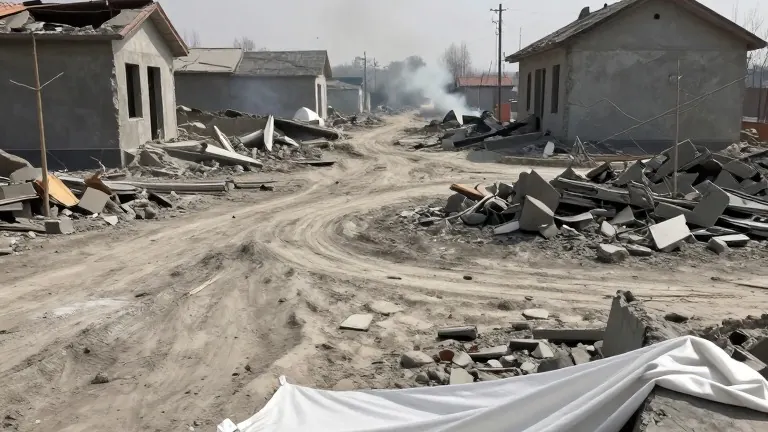
At least 62 people were injured in Russian strikes on a medical facility in Kharkiv on November 3, even as the United States prepared to host new peace negotiations.
The US plans to mediate working-level talks between Ukrainian and Russian delegations in Abu Dhabi on November 10 and 11. These discussions aim to renew efforts to end the war following a temporary cease-fire last week that facilitated humanitarian aid in Oleshky, a Russian-occupied city in southern Ukraine. US special envoy Steve Witkoff announced the schedule on November 2. The agenda covers post-war security, de-escalation, and humanitarian efforts. Witkoff and Jared Kushner are expected to lead the American delegation. Russian President Vladimir Putin accepted the trilateral format after meeting Witkoff in St. Petersburg two weeks ago.
President Donald Trump seeks progress after diplomacy stalled following a war involving the United States, Israel, and Iran. Fighting continued elsewhere despite the recent pause in hostilities. On November 3, Ukrainian drones struck a refinery in Yaroslavl, Russia. Officials said Russian attacks also damaged Ukrainian energy infrastructure.
William Taylor, a former US ambassador to Ukraine, identified Russia's willingness to accept a permanent cease-fire as the decisive issue. He noted that Washington and Kyiv have supported such a measure, while Russia rejected an earlier energy cease-fire proposal from the first Trump administration. Technical talks in January and February advanced monitoring arrangements but did not halt fighting. Taylor stated that a Russian decision to stop fighting would allow specialists to address surveillance and enforcement.
Heather Conley, a senior fellow at the American Enterprise Institute, expressed lower expectations for the upcoming meetings. She anticipated the resumption of talks and possible prisoner exchanges rather than a final agreement. Conley argued that effective security requires NATO membership or Ukrainian development of defensive and offensive capabilities with European assistance. She noted that Ukraine is pursuing these capabilities but needs more time and greater production capacity.
US officials will meet European representatives in Brussels this week to discuss security guarantees and reconstruction support. Participants from France, Germany, Britain, the European Union, and NATO will attend. Taylor argued that Europeans should participate directly in Abu Dhabi, citing a proposed European-led coalition as a means to enforce a cease-fire. Matthew Boyse, a Hudson Institute fellow, observed that earlier negotiations secured humanitarian gains but left fundamental disagreements unresolved. He suggested Moscow might prolong discussions, believing that time favors Russia and that President Trump may be politically weaker after the US elections.
Boyse warned that Russia could use localized cease-fires to seek substantial Ukrainian concessions. He characterized Putin's objective as securing recognition of a Russian sphere of influence and control over Ukrainian territory, similar to the 1945 Yalta settlement. An agreement that sacrifices Ukraine's sovereignty, he argued, would harm US standing in Central and Eastern Europe.