Autonomy Strategy Shift: Tesla Develops Proprietary Mapping Infrastructure
Tesla’s AI leadership has confirmed the development of an internal mapping system to address persistent navigation errors, marking a significant departure from the company’s long-standing vision-only philosophy.
By Jabari Long ·
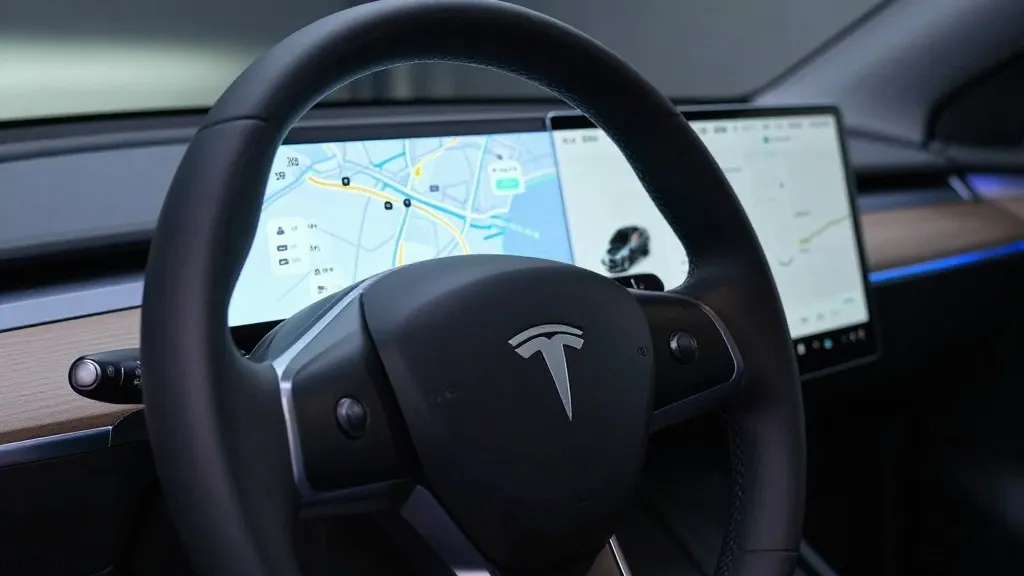
Tesla has officially acknowledged that its Full Self-Driving system requires its own dedicated mapping infrastructure to resolve recurring operational errors. The company’s VP of AI, Ashok Elluswamy, detailed this new initiative during the Q3 2026 earnings call. He stated that the team is constructing a new AI-based mapping and navigation architecture designed to reduce reliance on external data providers. This development represents a strategic pivot for a manufacturer that previously championed a pure vision-based approach to autonomous driving.
The decision addresses specific pain points identified by users, including inaccurate speed limit recognition, difficulty with parking maneuvers, and suboptimal route selection. Elluswamy noted that the new system will be fed by data collected collectively from the Tesla fleet. It is designed to learn individual driver preferences and respond to voice commands. The technology is scheduled to debut with FSD version 15, initially managing the start and end of trips, before expanding to handle broader navigation and destination logic in subsequent months.
This announcement follows a direct query from a retail investor during the shareholder Q&A session. The investor highlighted that mapping remained a significant issue for FSD, specifically citing speed limits, parking, and route choices as the primary failures. They asked why the company continued to depend on third-party maps. Elluswamy agreed with the premise, stating that Tesla should no longer be dependent on external maps, thereby validating the need for an in-house solution.
The shift is notable given the company’s historical stance on the subject. In 2019, CEO Elon Musk publicly dismissed high-precision lane maps as a "huge mistake" and a "really bad idea" that rendered self-driving systems brittle. At the time, Tesla also labeled lidar a "fool’s errand," arguing that cameras and AI were sufficient for driving anywhere. This contrasts with the 2015 launch of Autopilot, where the company mentioned building high-precision maps with significantly higher granularity than standard navigation tools.
The need for better environmental understanding is underscored by recent performance data. A Belgian road safety group found that FSD exceeded speed limits in 55% of tested 30 km/h zones in Brussels, averaging 44 km/h. In many instances, the vehicle’s display incorrectly showed a 50 km/h limit. In the United States, the NHTSA is considering an investigation into claims that Tesla Robotaxis speed through active school zones, a review covering approximately 1,000 Model Y and Cybercab vehicles.
Tesla’s new approach mirrors the methodology used by Waymo, which maps cities by driving sensor-equipped vehicles through them before launching service and continues to update those maps. The primary technical difference lies in Waymo’s use of lidar on its vehicles. Tesla’s fleet will now serve a dual purpose, acting both as a driving fleet and a data-collection network to build a shared map layer. This aligns with Tesla’s current Robotaxi operations, which are already limited to specific geofenced service areas.
Critics argue that this development contradicts years of marketing that positioned Tesla’s system as a general solution working anywhere without specialized maps. By building a map layer to fix what the vision system cannot reliably interpret, such as simple road signs, the company is adopting a strategy similar to its competitors. The implementation of this new mapping architecture is expected to refine the system’s accuracy, though unsupervised FSD for consumer vehicles remains targeted for Q2 2027.