Johnson's warning of Democratic chaos rings hollow as GOP loses House
As results confirm a Democratic majority, the Speaker's final messages of contrast and the record of Republican achievements stand in sharp relief against the voters' decisive choice for change.
By Jabari Long ·
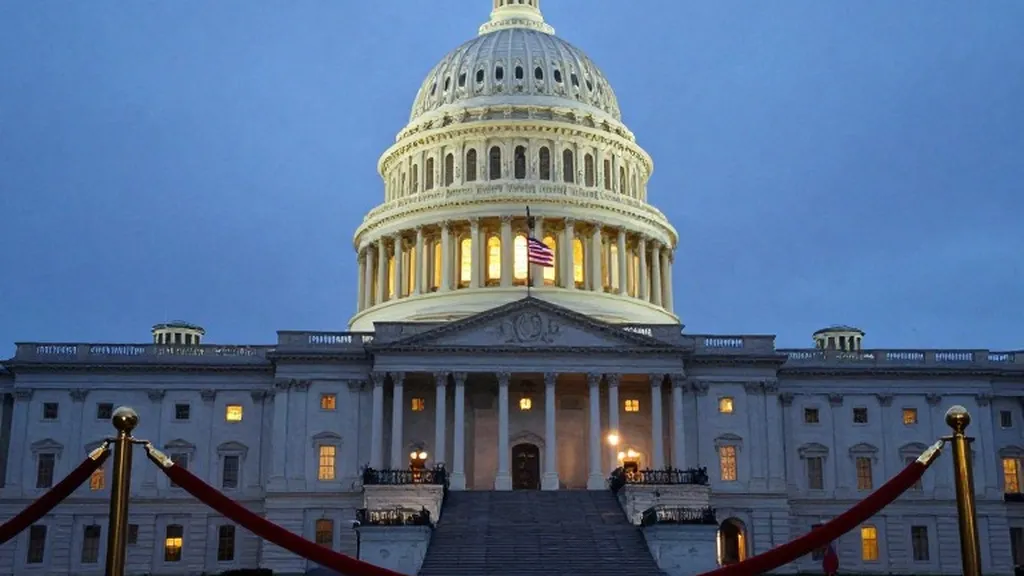
In the final days before the election, House Speaker Mike Johnson painted a stark picture of what a Democratic-controlled Congress would mean for the country. He warned that even a narrow Democratic House would be held hostage by the Democratic Socialists of America, citing the recent unrest in France as a dark harbinger of the chaos to come. Johnson described the upcoming two years as a period of daily turmoil, arguing that voters faced a choice between common sense and a far-left insurgency that sought to dismantle the foundations of American prosperity.
Johnson’s arguments were grounded in a specific critique of the Democratic Party’s direction. In a USA Today op-ed published on October 30, he wrote that Democrats had bent the knee to their far-left wing, forcing even centrist members to align with socialist policies. He pointed to the platform of the DSA, which calls for eradicating borders and prisons, abolishing the Senate, and replacing the presidency with an executive handpicked by a DSA-run Congress. Johnson noted that veteran strategist James Carville admitted he would prefer Republicans keep the House rather than have Democrats win by a small margin, because the party would be held hostage by its socialist cadre.
The Speaker used France as a central example in his warnings. He described the violent riots in the country, including the smashing of buildings and the looting of shops, as the inevitable result of decades of misguided policy choices such as lax immigration and suffocating regulation. Johnson argued that French leaders had allowed their nation to be looted and burned by far-left radicals who hated it, serving as a preview of what could happen in the United States if Democrats gained control of Congress. He characterized the chaos in France not as peaceful demonstrations but as a crisis born from abandoning fiscal restraint and principles of assimilation.
Contrasting this vision of disorder, Johnson highlighted the record of the Republican majority during the 119th Congress. He stated that Republicans delivered a $4.6 trillion tax cut, which he described as the largest middle-class and working-class tax cut in history. This package included an average $10,900 boost in take-home pay for a family of four through measures such as no tax on tips and overtime, a bigger standard deduction, and an expanded child tax credit. Johnson also pointed to the creation of the first-ever nationwide school choice program and the launch of Trump Accounts for children born between 2025 and 2028.
Beyond tax relief, the Speaker emphasized other legislative achievements that he said defined the Republican tenure. He cited a $1.6 trillion reduction in wasteful federal spending and efforts to unleash American energy dominance after years of Democratic efforts to phase out fossil fuels. Johnson noted that more than a million private-sector jobs had been added to the economy, with American manufacturing reshoring as a result of pro-growth policies. He argued that these results were achieved despite Democrats forcing three government shutdowns, including the longest in U.S. History, and with the slimmest House majority since the Great Depression.
During a Fox News interview, Johnson reinforced the message of a contrast election. He told listeners that the polls were underestimating Republican enthusiasm and that the American people understood the difference between the two parties. He warned that if Democrats took control, they would be crazier than during the Obama and Biden-Harris years due to their far lurch to the left. Johnson stated that it would be chaos every day for two years in the next Congress, with angry Democrats seeking retribution against President Trump and his administration.
The Speaker also addressed the specifics of the Democratic agenda, noting that they wanted to abolish borders and prisons, defund the police, and put men back in women’s sports. He described the current Democratic bloc as being further left than the previous progressive group, calling it a harbinger of what was to come in the party. Johnson argued that voters were savvy and paying attention to this contrast between common sense and absolute crazy, believing that this understanding would juice enthusiasm for the Republican side.
Despite these warnings, the results began to come in showing a different outcome. According to the Associated Press, voters took a wrecking ball to the traditional map of political battlegrounds, electing Democrats in states that were long considered reliably Republican. In the U.S. House, Democrats won 223 seats to the Republican 133, a result that confirmed the loss of the majority Johnson had fought to protect. In the U.S. Senate, Democrats won 20 seats to the Republican 13, with two seats remaining uncalled, effectively securing control of both chambers.
The Democratic victories were a rebuke to President Donald Trump and Republican governance. The wins delivered a majority of governorships to Democrats for the first time in two decades, allowing them to put up a stronger defense against the president’s second-term agenda. In Texas, no Democrat had won a statewide race since 1994, but Gina Hinojosa defeated Greg Abbott for governor, and James Talarico won the Senate seat. In South Carolina, Annie Andrews became the first Democrat to win a Senate seat there since 1998.
Ballotpedia data confirmed the shift in partisan control, showing that 27 House seats and seven Senate seats changed party hands to the Democrats. The results indicated a durable tectonic shift in the political landscape, with Democrats winning in both battleground and deep-red states. As the final tallies settled, the warnings of a chaotic future and the boasts of a historic record stood side by side, marking the end of an era for the Republican majority and the beginning of a new congressional resistance to the White House.