Democrats seize Congress, ending GOP control after sweeping 2026 midterm losses
Voters rejected the party in power as Democrats took the House and Senate, with key state races shifting control in Texas and other battlegrounds.
By Layla Petrov ·
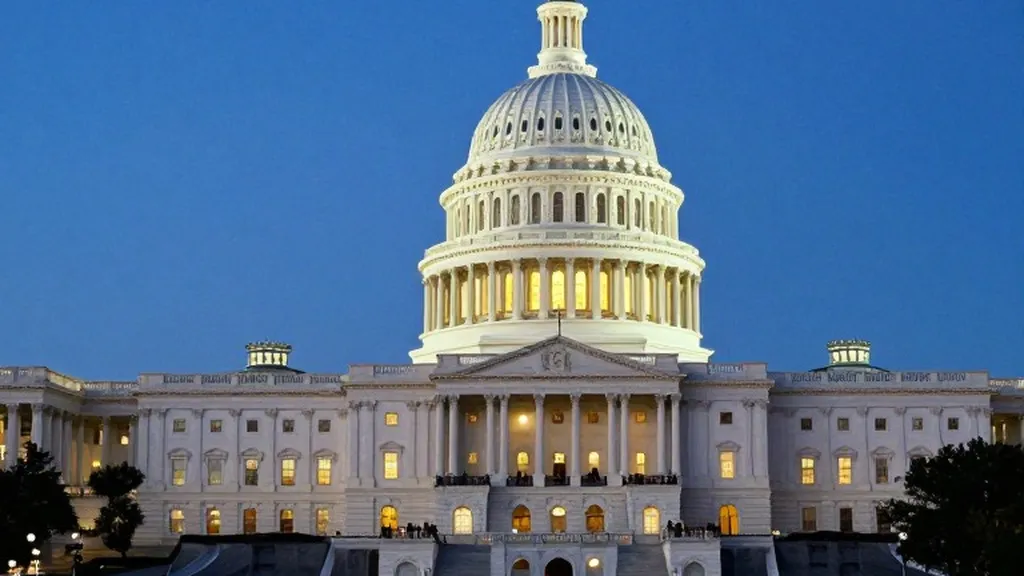
Democratic candidates captured full control of the United States Congress on Tuesday, November 3, 2026, in a decisive reversal of political power that ended two years of Republican dominance in Washington. Democrats won 233 of the 435 seats in the House of Representatives and 20 of the 35 contested seats in the Senate, securing majorities in both chambers. This outcome delivers a divided government that will see the new leadership of Congress sworn in on January 3, 2027, with House Democratic Leader Hakeem Jeffries poised to become the first Black speaker of the House. The victory marks a significant shift from the 2024 results, where Republicans held a 220-215 majority in the House and a 53-47 majority in the Senate.
The sweep was driven by widespread voter dissatisfaction with the administration of President Donald Trump, particularly regarding the economy and the ongoing war in Iran. The AP Voter Poll indicated that about six in ten voters disapproved of how the president is handling the presidency, while three-quarters described the economy as not so good or poor. Many voters cited the high cost of living, including gas and groceries, as the primary factor in their choice. In losing key Senate races in Ohio, Iowa, Maine, and North Carolina, majorities of voters stated that the Republican candidates were too supportive of the unpopular president, suggesting that the party's brand became a liability rather than an asset in this cycle.
Republican efforts to reshape the political map through mid-decade redistricting largely failed to prevent the Democratic surge. President Trump urged eight states to redraw congressional districts to favor his party, but the strategy backfired in many areas. In Texas, Democrats won control of the state House for the first time since 2002, and they also elected Gina Hinojosa as the state's first Democratic governor since 1994. Republicans lost most of the Democratic-held seats they had targeted to flip and failed to retain others they had considered safe. Former Attorney General Eric Holder, chair of the National Democratic Redistricting Committee, stated that the Republican plan was systematically dismantled by voters who chose a new majority.
State-level results mirrored the federal trend, with Democrats taking full control of state governments in at least five states where they previously shared power. Democrats won 22 of the 36 gubernatorial races, gaining offices in Georgia, Iowa, Ohio, and Texas. In Wisconsin, Democrats flipped both chambers of the state Legislature, breaking a 16-year Republican majority. Similar trifectas were secured in Michigan, Minnesota, and Pennsylvania, where Democrats retained the governor's office and gained or kept control of both legislative houses. These state victories give Democrats significant leverage to implement policies on taxes, education, and infrastructure without the threat of a legislative veto.
President Trump reacted to the losses with a mix of conciliation and deflection. On Wednesday, he held a briefing at the White House to discuss the construction of a new ballroom, a topic he emphasized for nearly 20 minutes while avoiding a detailed discussion of the election results. He told reporters that if he had been on the ballot, he would have won in a landslide. The president acknowledged that his party's candidates did not receive enough love from supporters, a sentiment he had expressed during his campaign rallies. He also warned of potential gridlock in the coming years, suggesting he would use his veto power to strike down Democratic agendas, though he expressed a desire to work with the new congressional leadership.
Vice President JD Vance blamed the war in Iran for the Republican defeat, a stance that marked a public break from the president's defense of the conflict. The war had sent fuel prices soaring, a major source of frustration for voters across the country. British Prime Minister Andy Burnham expressed hope that the election results would focus minds in Washington on ending the conflict. The economic impact of the war, combined with inflation, created a potent backdrop for the Democratic message that the country needed a change in direction in Congress to address the everyday costs of living for American families.
In the House, the Democratic margin is wide enough to support a robust oversight agenda. House Democrats have promised a 100-day plan that includes efforts to lower the costs of gas and groceries, as well as bills to reverse cuts to healthcare programs. They have also signaled an intent to launch investigations into the executive branch, with top committee members hinting at subpoenas and accountability measures. This approach contrasts with the Republican strategy of the past two years, which focused on expanding presidential authority and passing a legislative agenda with minimal opposition. The new Democratic leadership faces the challenge of translating their mandate into concrete policy changes quickly to maintain public support.
The Senate race in Alaska remains the last major uncertainty in the federal results, with the outcome potentially taking weeks to be determined due to an unusual voting system and a legal challenge by the Trump administration. However, the overall balance of power is already shifting. Democrats now hold at least 28 governorships, a significant increase from their previous count. This expansion of power at the state level allows them to test policies in their own jurisdictions and build a broader platform for the next election cycle. The party's ability to deliver on economic promises will be crucial in sustaining the momentum they gained on Tuesday.