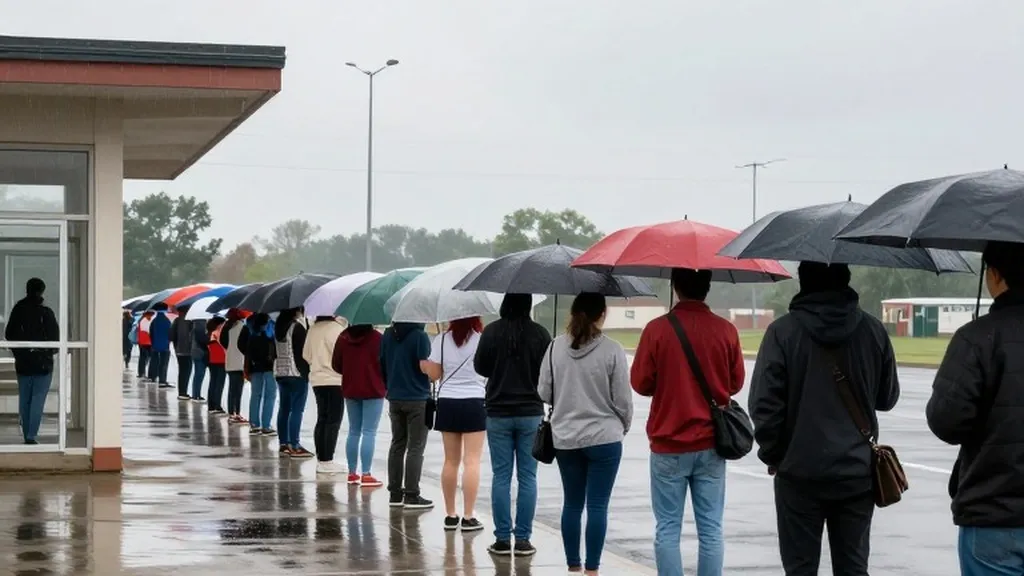
Turnout is the deciding factor as 57 million cast ballots early
Both parties are betting on voter engagement today, with Republicans defending their Senate majority and Democrats pushing for a net gain in the House.
By Madison Lewis ·
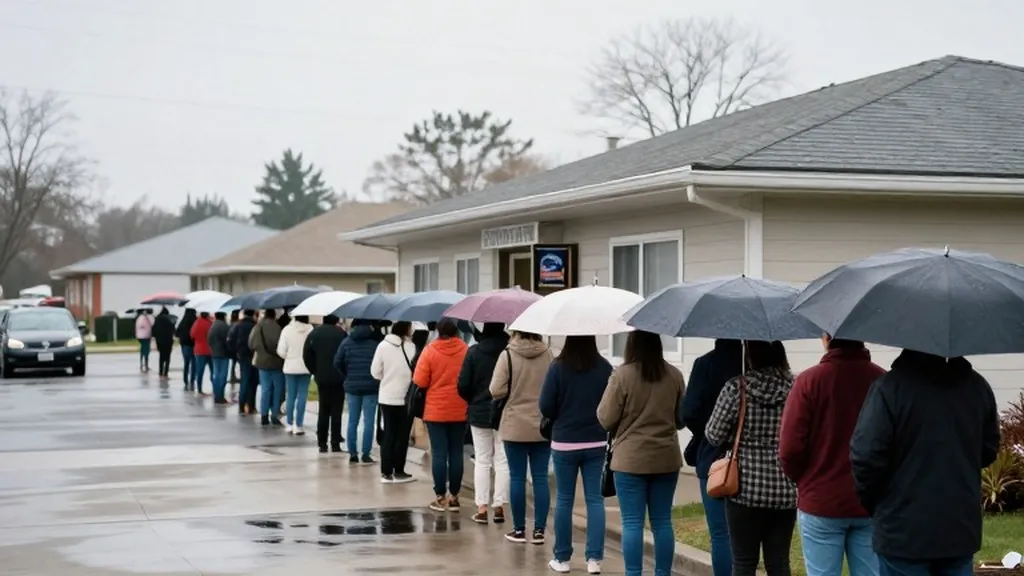
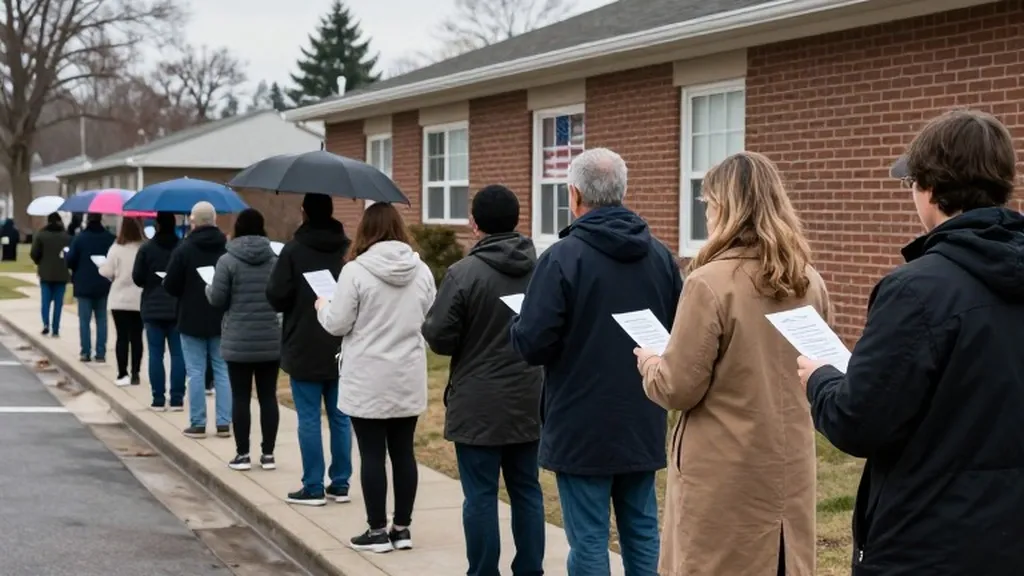
More than 57 million Americans cast their ballots before Tuesday morning, a figure that already surpasses early voting totals from four years ago in many closely watched states. This surge in participation is the central variable for the day. The election is widely viewed as a referendum on President Donald Trump's second term, with voters expressing frustration over high prices and an unpopular war with Iran. 35 percent of U.S. Adults approve of Trump's job performance, while only 25 percent approve of his handling of the economy. About 7 in 10 Americans say the country is heading in the wrong direction, with most blaming the president for rising costs.
Republican leadership is focused on holding the Senate, where they currently hold 53 seats. Democrats need a net gain of four seats to claim the majority. One or two Senate seats could tip the balance of power. In the House, all 435 seats are up for grabs. Republicans hold 218 seats and Democrats hold 214, with one independent and several vacancies. Democrats need a net gain of three districts to secure a majority, while Republicans can afford to lose no more than two seats. 46 battleground districts are identified, with 25 currently held by Democrats and 21 by Republicans.
RNC Chairman Joe Gruters emphasized the importance of engagement, stating that everything depends on turnout. He said that if Republicans turn out their voters, they will win, which is what they have been planning for. The ground game for Republicans has been intense, with the president holding dozens of rallies. His schedule included stops in Mississippi, South Carolina, and Texas, ending Sunday in Salina, Kansas. In Salina, Trump told supporters to pretend he was on the ballot, a message aimed at energizing the base. However, many Republican candidates have kept some distance from the president, reflecting a cautious approach to the race.
Democrats are described as cautiously optimistic. DCCC Chair Rep. Suzan DelBene stated that the American people are angry and want change. The party is focusing on economic issues, with voters like James Moore, a librarian in Raleigh, North Carolina, citing higher taxes and healthcare costs. Moore said he is paying more for everything, a sentiment that resonates with the finding that most voters blame Trump for high prices. In Palm Beach Gardens, Florida, voter Mark Barker offered a contrasting view, saying he has been following Trump the whole time and believes he is doing an awesome job.
The Senate races are particularly tight in several states. In Maine, Senator Susan Collins faces Democratic former state Senate President Troy Jackson. The AP notes that economic strain and tariffs have made the state competitive, with all four major race ratings groups calling it a toss-up. In Iowa, the seat is open after Joni Ernst's retirement, and it is rated a toss-up or a lean for Republicans. Kansas, a reliably Republican state, has become central to the fight for Senate control, with the race rated a toss-up to lean Republican. In Alaska, the race is rated a toss-up to lean Democratic, and the Trump administration has filed a lawsuit related to the certification of the result.
Governor races are also pivotal, with 36 governorships on the ballot. Republicans currently hold 26 governor's offices, and Democrats hold 24. Democrats need a net gain of two governorships to achieve a nationwide majority, which Republicans have held since 2010. The Associated Press identifies competitive races in Texas, Florida, and Iowa. In Georgia, Republican health care executive Rick Jackson is running against Democratic former Atlanta Mayor Keisha Lance Bottoms. In Ohio, Republican Vivek Ramaswamy is facing Democrat Amy Acton, with the race complicated by an ad controversy involving Acton's estranged mother.
Election administration issues have added to the day's complexity. A federal judge temporarily barred the Trump administration from carrying out a plan to prevent noncitizen voting, a move critics say risks disenfranchising eligible voters. Another judge ordered the administration to stop demanding that California election officials segregate ballots cast by people on lists of suspected noncitizens. The U.S. Postal Service has added hours, staff, and special lines to ensure mail ballots are counted on time. These administrative hurdles are part of a broader push by the administration to address what it sees as voting fraud, including claims that noncitizens vote in large numbers.
The financial stakes are high, with the 2026 elections likely to be the most expensive in history. Republican committees outraised and outspent Democratic committees at the committee level, aided by Trump-affiliated groups and Elon Musk. However, at the candidate level, Democrats outraised their opponents. An AP analysis of AdImpact data shows that 88.1 percent of Republican general election TV ad spending went to states and districts Trump won in 2024. This included more than 850 million dollars in areas where he won by 10 points or more, a strategy aimed at protecting the party's base in safe districts.
If Democrats win even one chamber, investigations and possible impeachment proceedings become likely. House Democratic Leader Hakeem Jeffries, who would be the first Black speaker if his party takes the House, has outlined a 100-day agenda focused on the cost of living and oversight. A strong Democratic night would also boost potential 2028 candidates such as Gavin Newsom, JB Pritzker, and Pete Buttigieg. Conversely, a strong Republican performance could complicate the path for Vice President JD Vance. The midterm pattern, where a president's party almost always loses seats, is being tested by new redistricting maps in states like Florida, California, and Texas.