Ten Key Senate Races Decide Control of Congress in 2026 Midterms
Voters in North Carolina, Georgia, Ohio, and eight other states face critical choices that will determine the balance of power in the U.S. Senate for the next six years.
By Madison Lewis ·

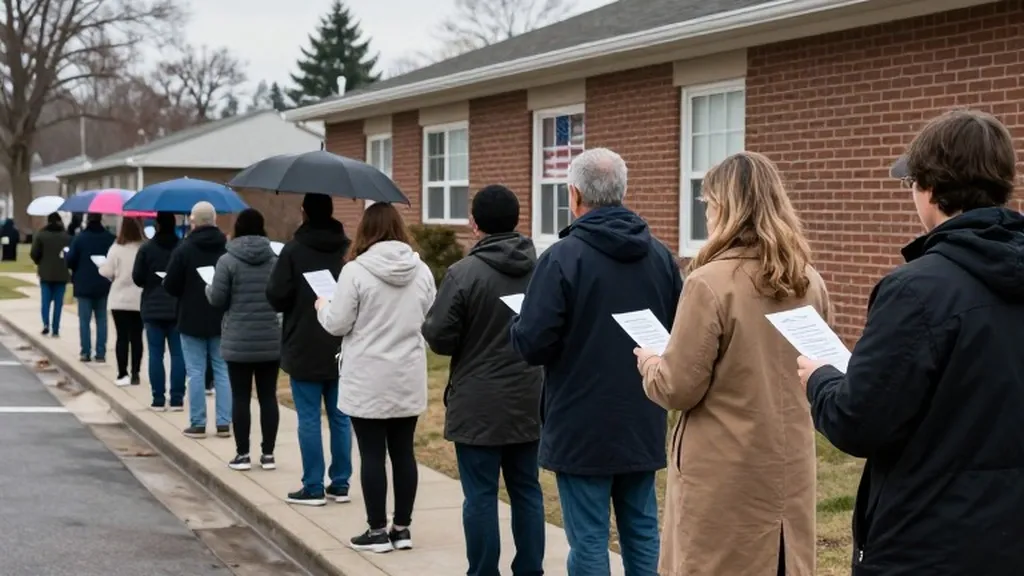
As polls open across the nation on Election Day, voters in ten critical states face decisions that will shape the composition of the United States Senate for the coming term. These races are central to the broader struggle over congressional control, with Republicans holding 53 seats and Democrats 45, plus two independents who caucus with the minority. Democrats require a net gain of four seats to claim the majority, a threshold that makes every contested district essential to their strategy. Conversely, Republicans can afford to lose only two seats to maintain their current advantage. The outcome in these specific matchups will determine whether the White House retains legislative support or faces a hostile chamber for the final two years of President Donald Trump's term.
In North Carolina, the open seat left by retiring Senator Thom Tillis has become a focal point for both parties. Democratic former Governor Roy Cooper faces Michael Whatley, the former chair of the Republican National Committee. The state voted for President Trump by a margin of 3.3 percent in 2024, making it a competitive environment. Tillis decided to step aside after a public disagreement with the president, creating an opportunity for both sides to field high-profile candidates. The AP notes that the race is viewed as a direct test of the president's standing in a state that has shifted toward the right in recent cycles.
Georgia presents another high-stakes contest where Democratic Senator Jon Ossoff defends his seat against Republican Representative Mike Collins. The state voted for Trump by 2.2 percent in the last presidential election, placing it firmly in the category of close races. Ossoff has emphasized his record of bipartisan cooperation, while Collins highlights his experience in the House. The AP describes the state as leaning or likely Democratic according to major rating services, yet the narrow margin of victory in 2024 suggests a tight finish is possible. Both candidates have campaigned heavily on economic issues, appealing to voters concerned about the cost of living.
Ohio holds a special election for the remainder of the term vacated by Vice President JD Vance. Republican Senator Jon Husted faces a challenge from Democratic former Senator Sherrod Brown. The state voted for Trump by 11.2 percent in 2024, giving Republicans a significant structural advantage. However, the AP highlights that the race is considered competitive due to the strength of the Democratic challenger. Brown, a veteran of the Senate, aims to leverage his name recognition to upset the odds. Republicans view this seat as crucial for maintaining their numerical edge in the chamber.
In Michigan, the retirement of Senator Gary Peters has opened the door for Republican former Representative Mike Rogers to challenge Democrat Abdul El-Sayed. The state voted for Trump by a slim 1.4 percent margin, making it one of the most evenly divided states in the country. El-Sayed is a rising star in the Democratic Party, known for his work in Detroit and his national profile. Rogers brings a long history in Congress and a conservative base. The AP notes that the race is rated as a toss-up or leaning Democratic by several analysts. On Sunday, Haley Stevens, a former primary opponent of El-Sayed, endorsed Rogers, signaling a unified Republican effort.
Texas sees Republican Attorney General Ken Paxton, whom President Trump endorsed over Senator John Cornyn in the primary, facing Democrat James Talarico. The state voted for Trump by 13.6 percent, but the AP identifies it as a competitive race due to demographic shifts and high voter engagement. Paxton has positioned himself as a defender of the border and fiscal responsibility, while Talarico focuses on healthcare and economic growth. The race is part of a broader pattern in the South where Democrats are increasingly competitive in states that were once reliably Republican. The outcome here will significantly impact the party that controls the chamber.
Maine offers a unique challenge for Republicans as Senator Susan Collins, who has served for decades, faces Democratic former State Senate President Troy Jackson. The state voted for Kamala Harris by 6.9 percent in 2024, making it one of the few Republican-held seats in a state that leaned Democratic. The AP notes that economic strain and tariffs have made the state particularly competitive. Collins has built a reputation for independence, often crossing party lines. Jackson aims to capitalize on the state's shift toward the left. All four major ratings services currently label this race as a toss-up, highlighting its unpredictability.
New Hampshire is holding an open seat following the retirement of Senator Jeanne Shaheen. Democratic Representative Chris Pappas faces former Republican Senator John E. Sununu. The state voted for Harris by 2.8 percent, suggesting a slight Democratic lean. Sununu, a former governor, has deep roots in the state's political establishment. Pappas focuses on his experience in the House and his commitment to local issues. The AP describes the race as closely watched due to the high caliber of candidates. The state's small electorate means that turnout will be a decisive factor in the final result.
Minnesota is another open seat race, with Democratic Lieutenant Governor Peggy Flanagan and Republican Michele Tafoya among four candidates for the seat vacated by Senator Tina Smith. The state has been trending Democratic in recent elections, but the presence of a high-profile Republican candidate keeps the race in play. Tafoya, a former sports broadcaster, brings a new face to the race, while Flanagan has served in statewide office. The AP notes that the race is competitive, with both parties spending heavily to sway undecided voters. The outcome will influence the balance of power in a state that is key to the Midwest strategy.